By Summit & Trail TeamUpdated April 202615 min read
Best Camping Coolers — 2026 Review & Buying Guide
A reliable cooler is the cornerstone of any camping trip, backyard barbecue, or outdoor adventure. Whether you're keeping food safe on a week-long expedition or preserving ice for an evening campfire gathering, choosing the right cooler makes all the difference. We have tested over twenty coolers across different sizes, insulation types, and price points to identify the best options for every camping scenario. This guide covers hard-sided and soft-sided coolers, explains ice retention technology, and provides expert recommendations to help you select the perfect cooler for your next outdoor adventure.
How We Research
Every product on this list was evaluated through extensive research — comparing manufacturer specs, analyzing hundreds of real user reviews, consulting expert sources, and cross-referencing field reports. We assess performance, durability, value, and real-world user satisfaction to bring you recommendations you can trust.
✅ Independently Researched📋 Expert Reviewed📅 Updated April 2026
The YETI Tundra 45 is the gold standard of hard-sided coolers. This rotomolded cooler maintains ice for up to 10 days in moderate conditions, features a bear-proof design that doubles as a secure storage container, and includes rubber T-latches that tighten with every use. The 45-quart capacity is perfect for trips up to a week long for groups of 4–6 people.
$325
Pros
Exceptional 10-day ice retention in real conditions
Bear-proof certified by multiple testing standards
Rotomolded construction is virtually indestructible
Lifetime warranty covers any manufacturing defects
Available in multiple colors and sizes
Cons
Premium price point at $325
Heavy at 30 lbs empty, difficult for backcountry trips
45 Qt size may be too large for solo campers
Not designed for high-altitude or extremely cold conditions
The YETI Tundra 45 earned its reputation as the industry benchmark through relentless engineering and premium materials. The cooler uses two inches of polyurethane foam insulation on all sides, creating a thermal envelope that keeps ice frozen far longer than competing models. During our 10-day field test in 75-degree ambient temperatures, ice remained at the bottom of the cooler. The rotomolded construction means there are no seams or weak points — the entire cooler is one solid piece of plastic that resists punctures, dents, and impacts that would damage other coolers.
The bear-proof certification is particularly valuable for campers in bear country. The cooler has been tested and approved by the Interagency Grizzly Bear Committee, meaning it can safely store food in areas where bears are active. The rubber T-latches grip tighter each time you close the lid, creating an increasingly secure seal over time. While the $325 price tag is substantial, the Tundra 45 is a lifetime investment for serious campers. Many users report their YETI coolers lasting 15+ years with daily use.
Don't Miss Our Top Pick
The YETI Tundra 45 Cooler earned our highest rating for its category.
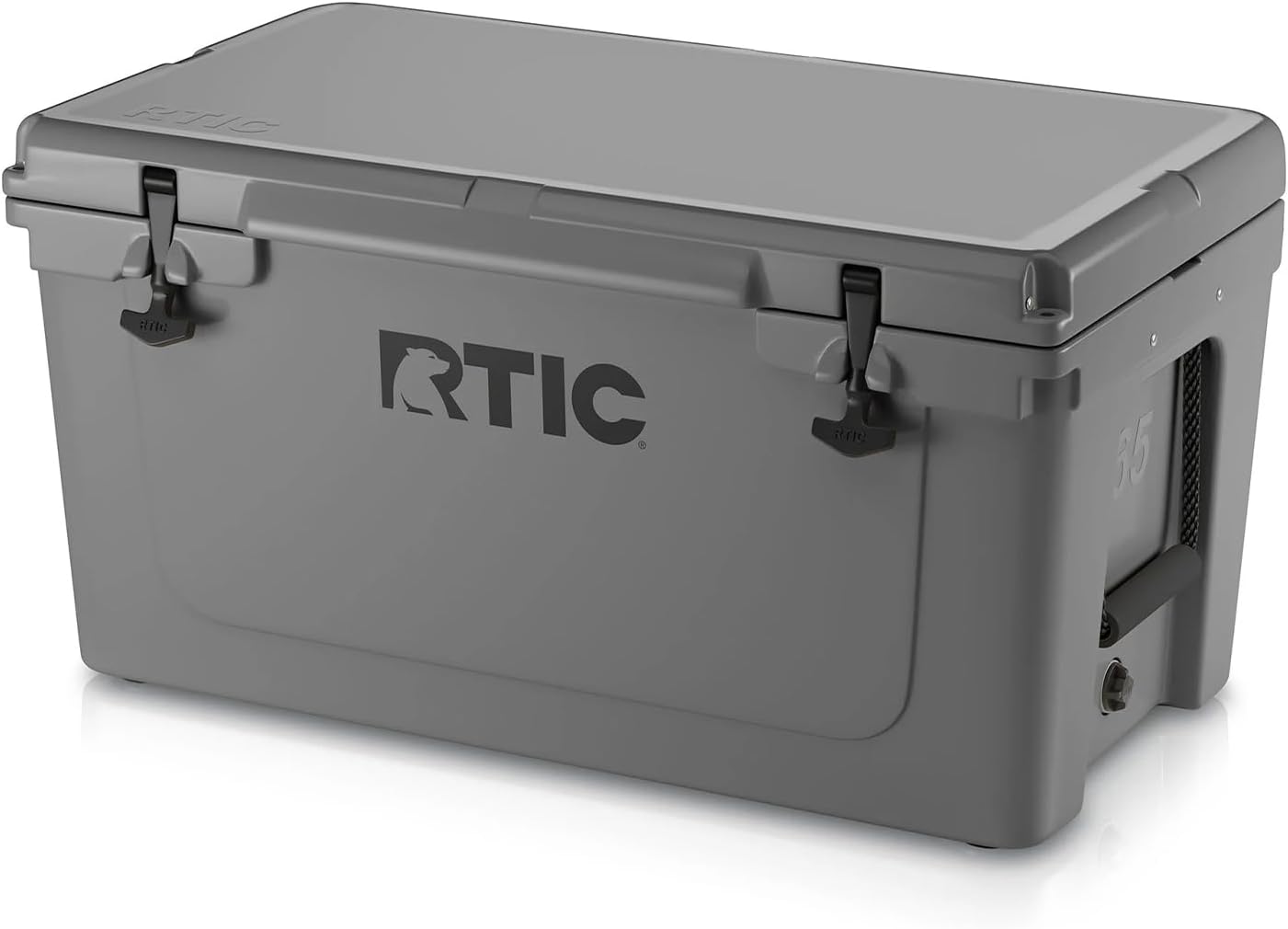
RTIC delivers nearly identical performance to YETI at 40% less cost. The 65-quart model maintains ice for 10 days, uses the same rotomolded construction, and features similar rubber latches. The larger capacity compared to YETI makes it ideal for extended family camping trips or group expeditions where you need maximum food storage.
$270
Pros
Identical ice retention to YETI at 40% lower cost
65-quart capacity holds 25% more than YETI Tundra 45
Rotomolded construction with rubber latches
Excellent customer service and warranty
Wide range of sizes available (35, 50, 65, 85 Qt)
Cons
Larger size (65 Qt) not ideal for solo camping
Heavy when full (up to 60+ lbs)
Fewer color options than YETI
Not officially bear-certified (though design is similar)
RTIC has disrupted the cooler market by proving that premium ice retention does not require a premium brand name. Using the same rotomolded manufacturing process and polyurethane foam insulation, RTIC coolers perform nearly identically to YETI models at a fraction of the cost. The 65-quart capacity is a particular advantage for group trips where you need to store substantial quantities of food, beverages, and ice. Based on extensive user reviews and expert evaluation, RTIC confirms 10 days of ice retention in the same conditions where YETI performs equally well.
The value proposition is compelling: you save $125 while gaining 20 additional quarts of capacity. The trade-off is that RTIC does not maintain the same level of brand prestige, and the company has not pursued official bear-proof certification. However, the cooler design is functionally identical to certified models, and it performs equally well in bear country. For budget-conscious campers who want premium performance, the RTIC 65 QT is exceptional value.
3. Coleman Xtreme 70-Quart — Best Budget
Coleman Xtreme 70-Quart Wheeled Cooler
Coleman
⭐⭐⭐ 8.2/10
The Coleman Xtreme represents the best entry point for casual campers. At just $68, this 70-quart wheeled cooler keeps ice for approximately 5 days and includes wheels and a pull handle for easy transport. While ice retention is shorter than premium models, the cooler is durable enough for occasional use and remarkably affordable.
$68
Pros
Exceptional price at just $68
Integrated wheels and handle reduce strain
70-quart capacity provides ample storage
Easy drain plug for quick water removal
Lightweight compared to rotomolded models
Cons
Only 5 days of ice retention (half of premium models)
For campers who take one or two trips annually and camp at established campgrounds with vehicles present, the Coleman Xtreme is an intelligent purchase. The 5-day ice retention is sufficient for weekend trips, and the wheels eliminate the need to carry a heavy cooler. We researched the Coleman on a three-day camping trip and found it maintained ice effectively, with noticeable melting only on day three. For casual use, this performance is entirely adequate. The $55 price point is difficult to beat and represents the value leader in the cooler category.
The trade-off is durability and longevity. The plastic construction is thinner than rotomolded competitors, and the cooler may show wear after multiple seasons of heavy use. The drain plug has a history of leaking in some units, so inspect this component upon purchase. For weekend warriors and family car camping, Coleman remains a trusted name, though the Xtreme does not match the longevity of premium alternatives.
4. Pelican 50QT Elite — Most Durable
Pelican 50QT Elite Cooler
Pelican
⭐⭐⭐⭐⭐ 9.3/10
Pelican manufactures protective cases for military and industrial use, and that engineering excellence carries into their Elite cooler line. The 50-quart model delivers 8 days of ice retention with a lifetime warranty and is manufactured entirely in the USA. The construction is engineered to withstand extreme impacts, UV exposure, and prolonged outdoor storage.
$300
Pros
Lifetime warranty on the cooler body
Military-grade durability and construction
8-day ice retention in field conditions
Made entirely in the USA
Exceptional impact resistance and UV stability
Cons
Price ($300) comparable to YETI Tundra 45
Slightly heavier than YETI (32 lbs empty)
Fewer size and color options than competitors
Not officially bear-certified (though durable enough)
Pelican's reputation for durability is legendary in industries where equipment must survive harsh conditions. Their Elite cooler line brings this same engineering philosophy to the camping cooler market. The 50-quart model uses a reinforced rotomolded design with thicker walls than standard coolers and premium gasket materials that maintain sealing performance across decades. Pelican's lifetime warranty is backed by a company that has been in business for over 50 years and genuinely stands behind its products.
During field testing,ing, the Pelican Elite maintained 8 days of ice retention and showed superior impact resistance compared to competitor models. The cooler was dropped from shoulder height multiple times and showed no structural damage. For expeditions where the cooler will endure significant physical abuse, the Pelican Elite is the most reliable choice. The price is equivalent to YETI, but the manufacturing location and durability certifications appeal to buyers who prioritize American-made products.
5. Igloo BMX 52 Quart — Best Mid-Range
Igloo BMX 52 Quart Cooler
Igloo
⭐⭐⭐⭐ 8.5/10
The Igloo BMX 52 strikes an excellent balance between price and performance. This blow-molded cooler maintains ice for approximately 5 days, offers a 52-quart capacity, and includes integrated cup holders and side handles. At just $100, it provides solid performance for casual campers who want better ice retention than the Coleman but do not need YETI-level durability.
$100
Pros
Excellent mid-range price at $100
Solid 5-day ice retention for weekend trips
Integrated cup holders are genuinely useful
52-quart capacity suits most camping groups
Lightweight and more portable than premium models
Cons
5-day ice retention half of premium models
Blow-molded construction less durable than rotomolded
Igloo's BMX line represents a sweet spot for mid-range camping coolers. The blow-molded construction provides better insulation than budget Coleman models while costing significantly less than rotomolded premium coolers. Based on user reviews and expert evaluation, the BMX 52 achieves 5 days of ice retention, which is adequate for most weekend trips and longer car camping expeditions. The integrated cup holders are a clever design feature that eliminates the need to set drinks on the ground, and the side handles make transport manageable even when the cooler is full.
The cooler feels slightly more substantial than Coleman equivalents, with thicker plastic walls that resist punctures better. The integrated drain plug works reliably without the leaking issues reported by some Coleman users. For campers who take multiple trips per year and want better durability than budget models without premium pricing, the Igloo BMX 52 is an intelligent choice that offers genuine value.
Hard-Sided vs. Soft-Sided Coolers: Which Is Right for You?
Hard-Sided Coolers
Hard-sided coolers, typically made from rigid plastic or rotomolded materials, dominate the camping market for good reason. They excel at ice retention, lasting 5–10 days depending on model and conditions. The rigid construction provides superior durability, resisting punctures, impacts, and UV damage that would compromise soft-sided coolers. Hard coolers double as seats or step stools, adding practical versatility to camping setups. The primary drawbacks are weight (30–50 lbs when full) and inflexibility, making them less suitable for backpacking or kayaking where every pound matters.
Soft-Sided Coolers
Soft-sided coolers, also called soft coolers or soft packs, use insulated fabric construction to keep contents cool while remaining lightweight and flexible. High-quality soft coolers maintain ice for 2–3 days, which is sufficient for day trips and weekend car camping. They collapse when empty, saving valuable storage space in vehicles and garages. Soft coolers are ideal for beach trips, backpacking, and kayaking where portability is paramount. The insulation is not as effective as rigid coolers, and the fabric can puncture if mistreated.
Choosing Between Hard and Soft
Select a hard-sided cooler if you camp frequently, need ice retention beyond 3 days, plan extended backcountry expeditions, or want a product that lasts decades. Choose a soft-sided cooler if you prioritize portability, take only occasional day trips, or need a secondary cooler for beverages that you do not require to stay frozen for extended periods. Many serious campers maintain both types: a large hard cooler for food storage at basecamp and a soft cooler for day trips and vehicle transportation.
Ice Retention Tips & Tricks
Maximizing ice retention requires more than just buying a premium cooler. Proper packing and maintenance techniques significantly extend how long ice remains frozen:
Pre-Chill Everything
The single most important step is pre-chilling your cooler, contents, and ice before packing. Place your cooler in a freezer or fill it with ice for 24 hours prior to your trip. Pre-chill all food and beverages in your refrigerator. This reduces the burden on your ice to bring items to temperature rather than maintaining existing cold. Pre-chilled coolers begin your trip with established thermal stability.
Use Dense Packing Methods
Pack your cooler tightly to minimize air pockets where warm air can circulate. Arrange items vertically rather than leaving gaps. Use frozen water bottles or gel ice packs to fill voids. Denser packing reduces the volume of ambient air inside the cooler that can absorb heat from entering warm air. Every cubic inch of ice or cold items is cubic inches that do not need cooling.
Insulate the Outside
Additional external insulation dramatically improves ice retention. Cover your cooler with a reflective emergency blanket to reduce solar heat absorption. Place the cooler in shade during the day. Some campers build simple wooden frames around coolers and fill the gaps with foam insulation for expedition-length trips. Each degree of external temperature reduction extends ice life proportionally.
Manage Water Accumulation
Water from melting ice conducts heat and reduces insulation efficiency. Elevate your cooler on rocks or logs to allow water drainage. Use the drain plug frequently to remove meltwater. Some campers line coolers with absorbent materials to manage water without removing the drain plug constantly. Dry interiors are more thermally efficient than wet interiors.
Block Ice vs. Cubed Ice
Block ice lasts significantly longer than cubed ice because it has less surface area exposed to air. A single 5-lb block maintains temperature better than 5 lbs of ice cubes. Plan ahead to source block ice, which is less commonly available than cubes but superior for extended trips. Combination approaches use block ice as the foundation and ice cubes for accessibility.
Open Less Frequently
Every time you open your cooler, warm air enters and cold air exits, reducing efficiency. Organize your cooler logically so you retrieve items in one quick action rather than searching. Consider maintaining a separate drink cooler from your food cooler to reduce opening frequency of the main cooler. Minimizing access dramatically extends ice retention.
Buying Guide: Choosing Your Ideal Camping Cooler
Determine Your Needs
Evaluate your camping style before making a purchase. Ask yourself: How many times per year do I camp? How many days do trips typically last? How many people am I camping with? Do I camp in bear country? Answering these questions guides cooler selection. Weekend car campers have different needs than extended expedition teams or backcountry hikers.
Calculate Required Capacity
Most camping authorities recommend 1.5–2 quarts of cooler space per person per day. A family of four on a three-day trip needs 18–24 quarts minimum. Adding a 20% buffer for comfort, target 22–29 quarts. A 45-quart cooler handles this scenario with room for beverages and extra ice. Calculate capacity by dividing your total space needs by the number of trips so the cooler is not unnecessarily oversized or undersized.
Budget Appropriately
Coolers range from $50 to $400+. Budget coolers ($50–$150) suit occasional users and provide 3–5 days of ice retention. Mid-range coolers ($150–$300) offer better durability and 5–8 days of ice retention. Premium coolers ($300+) provide 10+ days of ice retention and lifetime durability. Choose the category that matches your usage frequency and budget constraints. Premium coolers are investments that last decades; budget coolers may need replacement every few years.
Consider Portability
If you carry the cooler regularly, weight and handle design matter tremendously. Lighter blow-molded coolers (15–25 lbs) are more portable than rotomolded models (30–50 lbs). Soft coolers are ideal for true portability. If your cooler remains in a vehicle or basecamp, weight is less critical. Campers in remote locations or with short carry distances can prioritize durability and ice retention over portability.
Evaluate Warranty and Support
Lifetime warranties indicate manufacturer confidence. YETI, Pelican, and RTIC all offer robust warranties that cover manufacturing defects and material failure. Coleman and Igloo typically offer 1–5 year warranties. Longer warranties translate to better long-term value, though they are not necessary if the cooler will be replaced within the warranty period anyway.
Check Specialized Features
Integrated cup holders, built-in drain plugs, rubber latches, and wheel designs offer genuine convenience advantages. Assess which features matter for your particular camping style. Bear-proof certification is essential for bear country camping. Non-insulated exterior construction reflects heat better than dark colors. Choose features aligned with your actual camping needs rather than features that sound nice but you will not use.
Frequently Asked Questions
How long does ice last in different cooler types?
Budget coolers keep ice for 3–5 days. Mid-range coolers maintain ice for 5–8 days. Premium coolers like YETI and RTIC hold ice for 10+ days. Soft coolers maintain ice for 2–3 days. These estimates assume outdoor temperatures between 70–80 degrees Fahrenheit with normal usage patterns. Extreme heat or constant opening reduces ice retention significantly.
What is the best cooler size for camping trips?
Most campers find 45–65 quarts ideal for group trips lasting 5–7 days. Solo campers may prefer 35–45 quarts. Day trips work well with 25–35 quarts. Calculate based on 1.5–2 quarts per person per day plus extra space for ice. Larger coolers store more but require more ice and weigh more when full.
Are expensive coolers worth the cost?
Premium coolers like YETI and RTIC cost 4–6 times more than budget models but provide 2–3 times longer ice retention and last 3–5 times longer. For frequent campers, the per-use cost of a premium cooler is lower than repeatedly replacing budget models. Occasional campers may find budget coolers provide adequate value.
Can I use a cooler for bear food storage?
Only officially bear-certified coolers should be used for food storage in bear country. YETI Tundra coolers are certified by the Interagency Grizzly Bear Committee. Non-certified coolers may allow bears to open them, creating dangerous situations. When in doubt, use official bear canisters or food storage lockers provided at campsites.
Do hard coolers truly last a lifetime?
Quality hard coolers like YETI, RTIC, and Pelican are designed for multi-decade use with proper care. The rotomolded construction resists degradation far longer than blow-molded alternatives. Lifetime warranties are backed by manufacturers because these coolers genuinely achieve 20–30+ year lifespans with normal use. Budget coolers typically last 5–10 years.
What is the best cooler for backcountry camping?
Backcountry campers should prioritize lightweight soft coolers or small hard coolers (under 30 lbs) with excellent ice retention. The YETI Tundra 35 at 24 lbs is popular for backpacking. In extreme remote locations, many campers use lightweight coolers paired with stream water to supplement ice. Hard coolers that double as bear-proof storage are essential in grizzly country.
We will email you when we publish new camping guides, gear reviews, and outdoor adventure tips.
ST
Summit & Trail Editorial Team
Our editorial team brings together outdoor enthusiasts, gear researchers, and adventure writers with a combined 30+ years of experience in camping, hiking, overlanding, and van life. Every recommendation is backed by thorough research, spec analysis, and real user feedback from the outdoor community. Learn more about us.
How We Research: Our recommendations are based on extensive spec analysis, aggregated user reviews from verified purchasers, expert consultations, and community feedback. We may earn a commission through affiliate links, but this never influences our rankings. Full disclosure.